
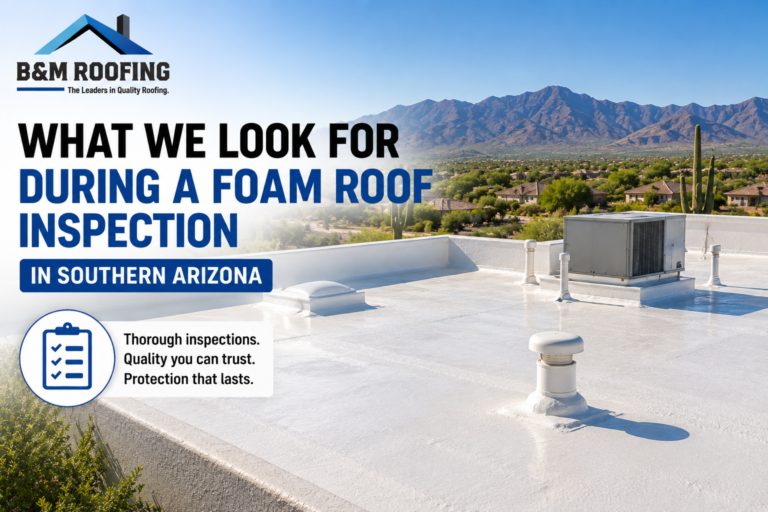
What We Look for During a Foam Roof Inspection in Southern Arizona
Spray polyurethane foam (SPF) roofing systems are commonly found on flat and low-slope roofs throughout Southern Arizona. When properly installed and maintained, foam roofing systems can provide effective waterproofing and insulation. However, Tucson’s intense UV exposure, extreme temperatures, and monsoon storms can gradually affect their condition.
At B&M Roofing, a foam roof inspection involves evaluating more than the roof’s appearance. We inspect the protective coating, foam surface, flashing, penetrations, drainage areas, and visible signs of deterioration to assess the overall condition of the roofing system.
Condition of the Protective Roof Coating
One of the most important components we evaluate during a foam roof inspection is the protective coating.
Spray polyurethane foam must be protected from UV exposure. Without an adequate protective coating, sunlight can cause the foam to deteriorate over time.
During an inspection, we look for:
- Thin or weathered coating
- Cracking or peeling
- Exposed foam
- Coating delamination
- Areas of excessive wear
- Previous coating repairs
The condition of the coating is an important factor in evaluating the serviceability of a foam roofing system.
Blisters, Bubbles, and Foam Deterioration
We inspect the roof surface for blisters, bubbles, cracking, and other visible irregularities.
Blisters or raised areas can develop for several reasons, including moisture, installation conditions, or separation within the roofing assembly.
During an inspection, we evaluate the size, location, and extent of these areas. We also look for deteriorated foam, soft spots, and visible damage that may affect the roofing system’s performance.
Not every surface irregularity indicates roof failure. The overall condition of the roofing system must be considered.
Flashing and Roof Penetrations
Roof penetrations and flashing are important areas to inspect on foam roofing systems.
These areas may include:
- Plumbing vents
- Roof jacks
- T-tops
- HVAC penetrations
- Skylights
- Parapet walls
- Scuppers
- Roof transitions
We look for cracking, separation, deteriorated sealants, damaged flashing, and evidence of previous repairs.
Because penetrations interrupt the continuous roof surface, they require particular attention during an inspection.
Ponding Water and Drainage
Proper drainage is important for flat and low-slope roofing systems.
During a foam roof inspection, we look for areas where water may accumulate following rainfall. Evidence of ponding may include staining, dirt accumulation, discoloration, or localized coating deterioration.
We also evaluate accessible drainage areas and scuppers for debris, restrictions, or visible deterioration.
The effects of ponding water depend on the roofing assembly, coating system, drainage conditions, and duration of water accumulation.
Separation and Delamination
Another important condition we evaluate is separation within the roofing system.
Foam roofing can sometimes develop areas where the foam has separated from the underlying substrate or where the coating has separated from the foam.
During an inspection, we look for visible signs of lifting, buckling, raised areas, cracking, or other conditions that may indicate separation.
Because underlying materials are concealed, a standard visual inspection may not identify every area of hidden deterioration.
Previous Repairs and Maintenance
Foam roofs often receive periodic maintenance and recoating throughout their service life.
During an inspection, we document visible previous repairs, including:
- Patched foam areas
- Reinforced repairs
- Previous coating applications
- Flashing repairs
- Penetration repairs
- Areas of localized foam replacement
Previous repairs are not automatically a concern. However, their condition and installation quality can provide important information about the history of the roofing system.
Roof Age and Existing Roofing Layers
The age of the foam roof and the materials beneath it are important considerations.
Some foam roofing systems are installed over existing roofing materials, while others are applied directly over an approved substrate.
During a standard visual inspection, it may not be possible to determine the complete composition or condition of concealed roofing layers.
We evaluate available information about the roof’s age, installation history, previous maintenance, and visible conditions to help assess the roofing system.
Why Foam Roof Inspections Matter in Southern Arizona
Southern Arizona’s intense sunlight, high roof temperatures, monsoon rainfall, and seasonal storms can be demanding on foam roofing systems.
The protective coating is particularly important because it helps shield the underlying foam from UV exposure and weather-related deterioration.
Regular inspections can identify developing coating wear, damaged foam, deteriorated flashing, and other conditions before they become more extensive.
At B&M Roofing, our goal is to provide homeowners with a clear assessment of the accessible roofing components and the conditions observed during the inspection.
Schedule a Foam Roof Inspection in Southern Arizona
If you are unsure about the condition of your foam roof, B&M Roofing provides professional roof inspections throughout Southern Arizona.
We proudly serve Catalina Foothills, Corona de Tucson, Green Valley, Marana, Mount Lemmon, Oro Valley, Picture Rocks, Saddlebrooke, Sahuarita, Sonoita, Tanque Verde, Tucson, and Vail.
Request a Professional Roof Inspection
B&M Roofing is a family-owned and operated roofing company proudly serving Southern Arizona since 2017.