
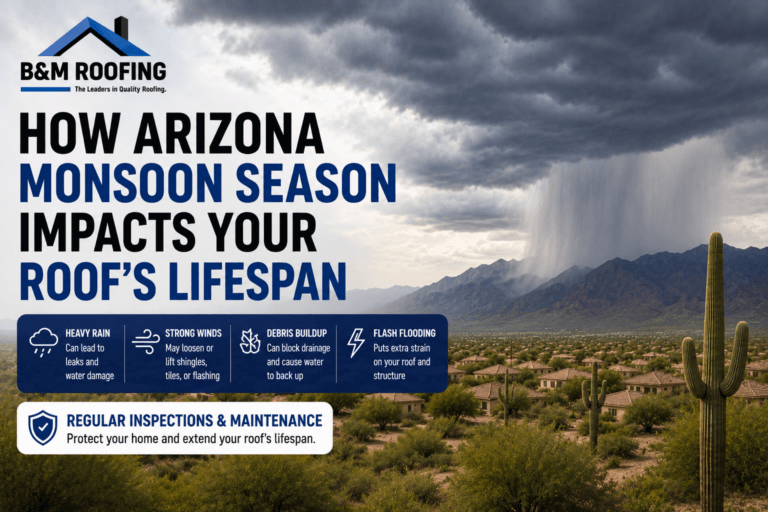
How Arizona Monsoon Season Impacts Your Roof’s Lifespan
Southern Arizona homeowners are familiar with the annual monsoon season. While the rain provides welcome relief from summer heat, monsoon storms can significantly impact the lifespan of your roof. High winds, heavy rainfall, flying debris, and occasional hail create conditions that can accelerate roof deterioration if problems are not identified and addressed promptly.
Understanding how monsoon season affects different roofing systems can help homeowners protect their investment and avoid costly repairs.
What Is Arizona Monsoon Season?
Arizona’s monsoon season officially runs from June 15 through September 30. During this period, Southern Arizona experiences:
- Strong wind gusts
- Heavy rain events
- Dust storms (haboobs)
- Lightning activity
- Occasional hail
These weather conditions place significant stress on roofing systems throughout Tucson and surrounding communities.
How High Winds Damage Roofs
Monsoon wind gusts frequently exceed 50 mph and can occasionally reach much higher speeds.
Common wind-related roofing issues include:
- Lifted roof tiles
- Displaced shingles
- Damaged flashing
- Exposed underlayment
- Debris impact damage
Even minor wind damage can create openings that allow water intrusion during future storms.
The Impact of Heavy Rainfall
Arizona roofs are designed to handle rainfall, but intense monsoon storms can overwhelm aging roofing systems.
Potential problems include:
- Roof leaks
- Water intrusion around penetrations
- Ponding water on flat roofs
- Saturated underlayment
- Interior ceiling damage
If a roof already has existing weaknesses, heavy rainfall often reveals them quickly.
Hail Damage Can Shorten Roof Lifespan
Although hail is less common than wind-driven rain, it can cause significant roof damage.
Depending on the roofing material, hail may result in:
- Cracked roof tiles
- Dented metal panels
- Damaged coatings on foam roofs
- Granule loss on asphalt shingles
Some hail damage may not be visible from the ground, making professional inspections important after major storms.
Debris and Tree Damage
Monsoon winds frequently carry debris across rooftops.
Common sources include:
- Tree branches
- Palm fronds
- Outdoor furniture
- Construction materials
- Loose landscaping debris
Impact damage can compromise roofing materials and create areas vulnerable to water intrusion.
How Different Roofing Systems Respond to Monsoon Storms
Tile Roofs
Tile roofs generally perform well during monsoon season but may experience:
- Broken tiles
- Slipped tiles
- Flashing damage
Even one broken tile can expose underlayment to the elements.
Built Up Roofs
Built Up roof systems are highly effective when properly maintained.
Potential storm-related concerns include:
- Coating wear
- Ponding water
- Surface damage from debris
Routine recoating helps maintain weather resistance.
Asphalt Shingle Roofs
Shingles can be vulnerable to:
- Wind uplift
- Granule loss
- Water penetration
Older shingle roofs are especially susceptible to storm damage.
Metal Roofs
Metal roofs typically offer excellent storm resistance but should still be inspected for:
- Loose fasteners
- Damaged flashings
- Impact dents
Proper installation is critical for long-term performance.
Why Roof Inspections After Monsoon Season Matter
Not all storm damage is immediately visible.
Professional inspections can identify:
- Hidden leaks
- Underlayment deterioration
- Loose roofing components
- Drainage issues
- Flashing failures
Addressing small issues early often prevents more extensive repairs later.
Preventive Maintenance Extends Roof Lifespan
One of the most effective ways to protect your roof from monsoon-related damage is through regular maintenance.
Recommended practices include:
- Annual roof inspections
- Clearing debris from roof surfaces
- Maintaining drainage systems
- Repairing damaged roofing components promptly
- Monitoring roof penetrations and flashings
Preventive maintenance can significantly extend the service life of nearly any roofing system.
Protect Your Roof Before the Next Monsoon Season
Monsoon storms are an unavoidable part of life in Southern Arizona, but they do not have to shorten the lifespan of your roof. Understanding the risks and scheduling regular inspections can help homeowners identify problems early and keep roofing systems performing as intended.
B&M Roofing provides roof inspections, maintenance, repairs, and roof replacement services throughout Tucson and Southern Arizona. Whether your roof has recently experienced storm activity or you simply want peace of mind before the next monsoon season, a professional inspection can help protect your investment.
Service Areas
Catalina Foothills • Corona de Tucson • Green Valley • Marana • Mount Lemmon • Oro Valley • Picture Rocks • Saddlebrooke • Sahuarita • Sonoita • Tanque Verde • Tucson • Vail