How Tucson’s Climate Impacts Your Roof Over Time
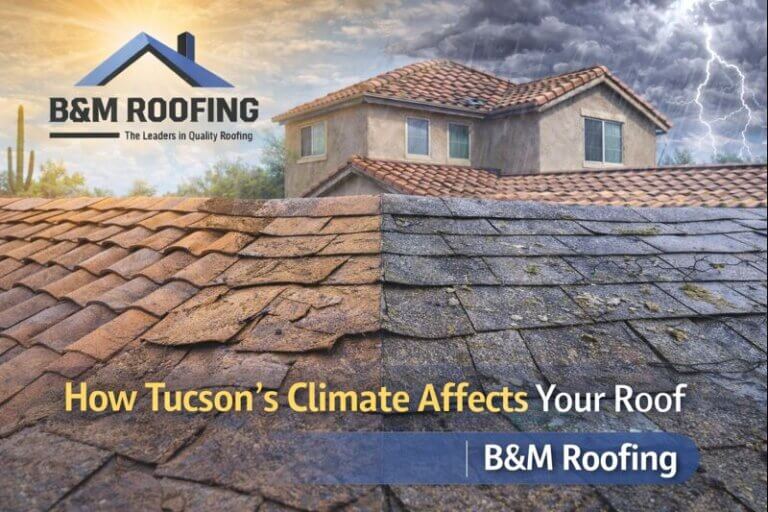
Tucson’s desert climate is one of the most demanding environments for roofing systems. Extreme heat, intense UV exposure, monsoon storms, and sudden temperature changes all contribute to roof wear and aging. Understanding how local climate conditions affect your roof helps homeowners take proactive steps to protect their investment and plan for long-term maintenance or replacement.
Extreme Heat and UV Exposure
One of the biggest challenges for roofs in Tucson is constant exposure to high temperatures and ultraviolet (UV) radiation. Prolonged heat can cause roofing materials to dry out, lose flexibility, and deteriorate more quickly. Asphalt shingles may become brittle, sealants can crack, and flat roofing membranes may experience accelerated aging.
Tile and metal roofs tend to perform better in high-heat environments, but even these materials require proper underlayment, ventilation, and regular inspections to maintain performance over time.
Monsoon Storms and Wind Damage
Southern Arizona’s monsoon season brings heavy rain, strong winds, and occasional hail. Wind-driven rain can penetrate vulnerable areas such as flashing, roof penetrations, and valleys. Flying debris can crack tiles, damage shingles, or puncture flat roofing systems.
Storm damage is not always immediately visible, which is why post-storm inspections are critical for Tucson homeowners.
Temperature Fluctuations and Thermal Movement
Daily temperature swings can be significant in the desert. Roofing materials expand during the day and contract at night. Over time, this thermal movement can loosen fasteners, stress seams, and degrade sealants—especially on metal and flat roofing systems.
Proper installation techniques and high-quality materials are essential to managing thermal expansion and contraction.
Dust, Debris, and Drainage Challenges
Dust and debris accumulation is common in desert environments. When combined with rain, debris can clog drainage areas and interfere with water flow. Flat and low-slope roofs are especially vulnerable to ponding water if drainage is compromised.
Routine maintenance and inspections help ensure proper drainage and prevent moisture-related damage.
How Tucson Homeowners Can Reduce Climate-Related Roof Damage
While climate stress cannot be avoided, homeowners can reduce its impact by:
-
Scheduling regular professional roof inspections
-
Addressing minor repairs promptly
-
Keeping roof surfaces and drainage areas clear
-
Choosing roofing materials designed for desert climates
Understanding average roof life expectancy by material can also help homeowners plan maintenance and replacement timelines more effectively.
When to Schedule a Professional Roof Inspection
If your roof is aging, has experienced recent storms, or shows signs of wear, a professional inspection can identify climate-related damage early. Inspections help determine whether repairs are sufficient or if replacement planning is needed.
B&M Roofing provides professional roof inspections for Tucson homeowners and offers clear, climate-specific recommendations.
To request a roof inspection, complete our inspection request form here