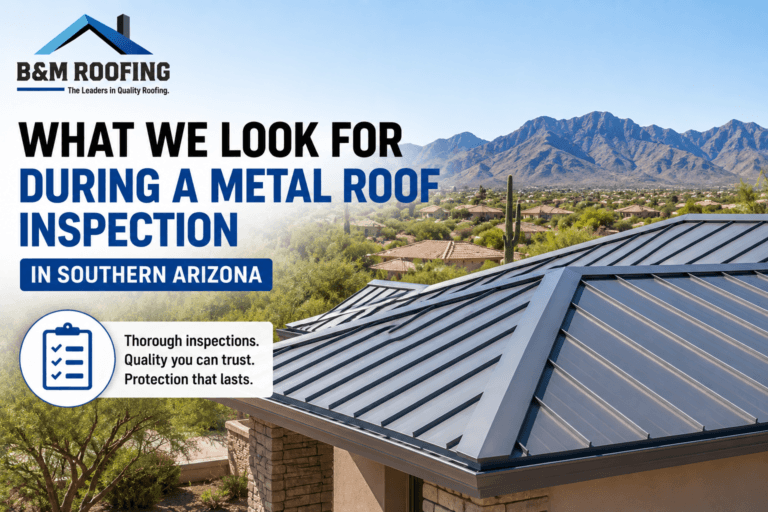
What We Look for During a Metal Roof Inspection in Southern Arizona
Metal roofing systems are known for their durability and long service life, but that does not mean they are maintenance-free. Southern Arizona’s intense sun, high temperatures, strong winds, monsoon storms, and temperature changes can affect metal roofing components over time.
At B&M Roofing, a metal roof inspection involves evaluating the overall condition of the accessible roofing system. We look at the metal panels, seams, fasteners, flashing, penetrations, sealants, roof edges, and other visible components for signs of damage, deterioration, or potential water intrusion.
Condition of the Metal Panels
One of the first things we evaluate is the overall condition of the metal roof panels.
During an inspection, we look for:
- Bent or damaged panels
- Loose or displaced panels
- Dents or impact damage
- Signs of wind damage
- Surface deterioration
- Rust or corrosion
- Areas where panels have separated or shifted
Damage does not always mean the entire roof needs replacement. The location and extent of the damage, roof age, installation method, and overall condition of the system all help determine whether maintenance, repair, or replacement may be appropriate.
Fasteners and Attachment Points
Fasteners are an important component of many metal roofing systems, particularly exposed-fastener roofs.
Over time, expansion and contraction of the metal panels can place stress on fasteners and attachment points. Fasteners may loosen, back out, become damaged, or develop deteriorated washers.
During an inspection, we look for loose, missing, damaged, or backed-out fasteners and other visible attachment issues that could leave the roofing system more vulnerable to water intrusion or wind damage.
Seams and Panel Connections
Metal roofing systems rely on properly installed seams and panel connections to help keep water out.
We inspect accessible seams for signs of separation, movement, damage, or deterioration. Depending on the type of metal roof, we may also evaluate laps and other connection points where two sections of the roofing system meet.
Small changes at these areas can become important because water can travel through openings that may not be obvious from the ground.
Flashing and Roof Transitions
Flashing is another critical part of a metal roof inspection.
We evaluate accessible flashing around:
- Roof edges
- Walls and headwalls
- Valleys
- Ridges
- Skylights
- Chimneys
- Roof transitions
- Other adjoining surfaces
We look for loose or damaged flashing, separation, deteriorated sealants, improper previous repairs, and other visible conditions that could create an opportunity for water intrusion.
Roof Penetrations and Sealants
Roof penetrations are some of the most vulnerable areas on any roofing system.
Proper metal roof design and installation must account for thermal movement in metal roofing systems as temperatures change.
On a metal roof, we inspect accessible areas around plumbing vents, roof jacks, HVAC penetrations, skylights, and other penetrations.
We look for cracking or deteriorated sealants, damaged flashing, separation, loose components, and evidence of previous repairs.
Sealants do not last forever. Southern Arizona’s heat and UV exposure can cause some sealants to dry, crack, or deteriorate over time, which is why these areas should be evaluated periodically.
Signs of Movement and Thermal Expansion
Metal naturally expands and contracts as temperatures change.
This is particularly important in Southern Arizona, where roofing materials can experience significant temperature changes between hot daytime conditions and cooler nighttime temperatures.
A properly designed and installed metal roofing system accounts for this movement. During an inspection, however, we look for visible signs that movement may be affecting panels, fasteners, seams, flashing, or other components.
Drainage and Ponding Areas
Drainage is also an important part of our evaluation, particularly on lower-slope metal roofing systems.
We look for debris accumulation, staining, areas where water may collect, and visible conditions that could interfere with proper drainage.
Standing water or repeated moisture exposure can increase stress on seams, fasteners, coatings, and other components of the roofing system.
Previous Repairs and Maintenance
Previous roofing work can provide important information about the history of a metal roof.
During an inspection, we may document:
- Previous patches
- Coating repairs
- Replaced fasteners
- Sealant repairs
- Flashing repairs
- Repaired seams
- Replaced or repaired panels
Previous repairs are not automatically a concern. We evaluate whether the repaired areas appear to be performing properly and whether there are signs of continued deterioration or water intrusion.
Roof Age and Overall Condition
A metal roof should not be evaluated based on one loose fastener, damaged panel, or deteriorated sealant alone.
We consider the overall condition of the roofing system, including its age, type of metal roof, installation method, panel condition, fasteners, seams, flashing, penetrations, drainage, previous repairs, and visible deterioration.
Metal roofing systems can have a long service life when properly installed and maintained. However, actual roof life varies considerably depending on the specific metal roofing system, installation quality, maintenance, exposure, and environmental conditions.
Why Metal Roof Inspections Matter in Southern Arizona
Southern Arizona creates unique challenges for roofing systems. Intense UV exposure, extreme roof temperatures, strong winds, monsoon rainfall, and repeated expansion and contraction can gradually affect even durable metal roofs.
Routine inspections can help identify developing maintenance needs and areas of deterioration before they become more extensive.
At B&M Roofing, our goal during a metal roof inspection is to evaluate the accessible components of the roofing system and provide a clear assessment based on the conditions we observe.
Schedule a Metal Roof Inspection in Southern Arizona
If you are concerned about the condition of your metal roof, B&M Roofing provides professional roof inspections throughout Southern Arizona.
We proudly serve Catalina Foothills, Corona de Tucson, Green Valley, Marana, Mount Lemmon, Oro Valley, Picture Rocks, Saddlebrooke, Sahuarita, Sonoita, Tanque Verde, Tucson, and Vail.
To request a professional roof inspection, visit our inspection request form