
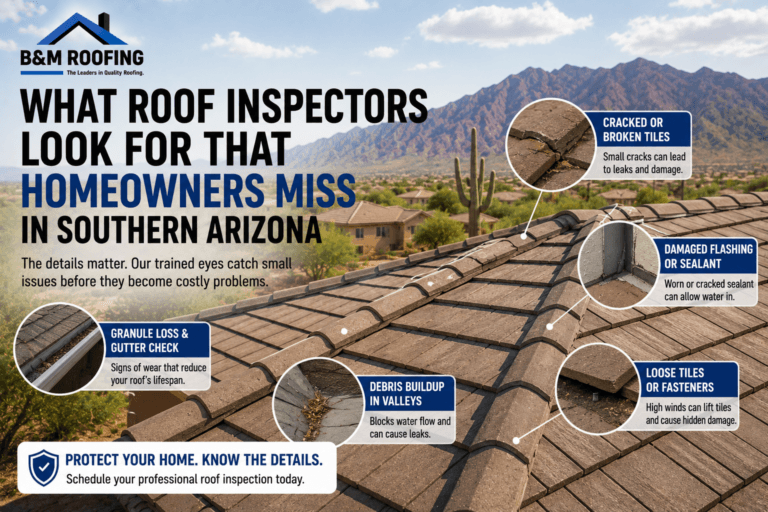
What Roof Inspectors Look for That Homeowners Miss in Southern Arizona
Many homeowners assume they can spot roof problems from the ground or during a quick visual check. While it’s helpful to look for obvious signs of damage, most roofing issues are not easily visible without a trained eye. In Southern Arizona—including areas like Tucson, Oro Valley, Marana, Vail, and Sahuarita—roofs are exposed to extreme heat, UV radiation, and monsoon storms. These conditions allow subtle problems to develop long before they become noticeable.
A professional roof inspection goes far beyond what the average homeowner can identify. Here’s what experienced roof inspectors look for—and why it matters.
Hidden Underlayment Issues
One of the most critical components of any roofing system is the underlayment, especially on tile roofs common throughout Catalina Foothills, Saddlebrooke, and Green Valley. While tiles may appear intact, the underlayment beneath them can deteriorate over time due to heat and moisture.
Roof inspectors look for:
- Signs of underlayment aging or failure
- Areas where water may be penetrating beneath the surface
- Early indicators of moisture damage
These issues are almost impossible to detect without a detailed inspection.
Flashing and Penetration Vulnerabilities
Flashing protects areas where the roof meets vents, skylights, chimneys, and other penetrations. These are among the most common sources of leaks.
Inspectors carefully evaluate:
- Cracked or deteriorated sealant
- Loose or improperly installed flashing
- Gaps that could allow water intrusion
Even small flashing failures can lead to significant problems during monsoon storms in areas like Tanque Verde, Picture Rocks, and Corona de Tucson.
Early Signs of Heat and UV Damage
Southern Arizona’s intense sun exposure causes gradual wear that may not be immediately obvious. Roofing materials can lose flexibility, dry out, or weaken over time.
A professional inspection identifies:
- Subtle material deterioration
- Granule loss on shingles
- Heat-related cracking or brittleness
Homes in higher-elevation areas like Mount Lemmon and Sonoita may also experience temperature swings that accelerate this process.
Structural and Drainage Concerns
Inspectors also evaluate the overall structure and performance of the roof system. This includes:
- Uneven areas or minor sagging
- Drainage patterns and water flow
- Debris buildup that could block drainage
Flat and low-slope roofs in communities like Sahuarita and Marana require careful inspection to prevent ponding water and long-term damage.
Storm Damage That Isn’t Immediately Visible
After monsoon storms, damage is not always obvious. Wind can loosen materials without fully displacing them, and debris can cause minor impacts that weaken the roof over time.
Inspectors look for:
- Lifted or shifted materials
- Small cracks or impact points
- Compromised areas that may fail later
This type of hidden damage is common across Southern Arizona, from Oro Valley to Vail.
Why Professional Inspections Matter
While homeowners can identify obvious issues like missing shingles or visible leaks, many roofing problems develop beneath the surface or in hard-to-see areas. A professional inspection provides a comprehensive evaluation and helps identify problems early—before they require costly repairs or full replacement.
Understanding average roof life expectancy by material can also help homeowners interpret inspection results and plan for future maintenance or replacement.
Schedule a Professional Roof Inspection
If you want a clear understanding of your roof’s condition, a professional inspection is the best place to start. B&M Roofing provides detailed roof inspections for homeowners throughout Southern Arizona, including:
Catalina Foothills, Corona de Tucson, Green Valley, Marana, Mount Lemmon, Oro Valley, Picture Rocks, Saddlebrooke, Sahuarita, Sonoita, Tanque Verde, Tucson, and Vail.
To request a roof inspection, complete our inspection request form here